Pressure on healthcare continues to increase. At the same time, there is growing awareness that healthcare professionals spend too much time on administration. The ambition to significantly reduce the time spent on record-keeping sounds both logical and urgent, but in practice it is less straightforward than it may seem.
During our webinar “Navigating the Challenge of Process Improvement in Healthcare”, we discussed this topic with Maurits Goutziers of BPM Power and change management expert Gerard Nauta of Planders. Their central message was clear: organisations that genuinely want to reduce the administrative burden need to look beyond systems or isolated improvement initiatives.
Process improvement in healthcare requires insight, collaboration and an approach that makes change genuinely workable in practice.
There is a pressing need to reduce the amount of time spent on administration. Staff shortages, increasing demand for care and growing pressure on the workforce make it essential to free up time for what ultimately matters most: providing high-quality care to patients and clients.
However, effective change does not begin with an instruction to “halve the administration”. Such a goal may sound appealing, but it can only be achieved once there is a clear understanding of:
In other words, without a clear understanding of the process, it is virtually impossible to make targeted improvements.
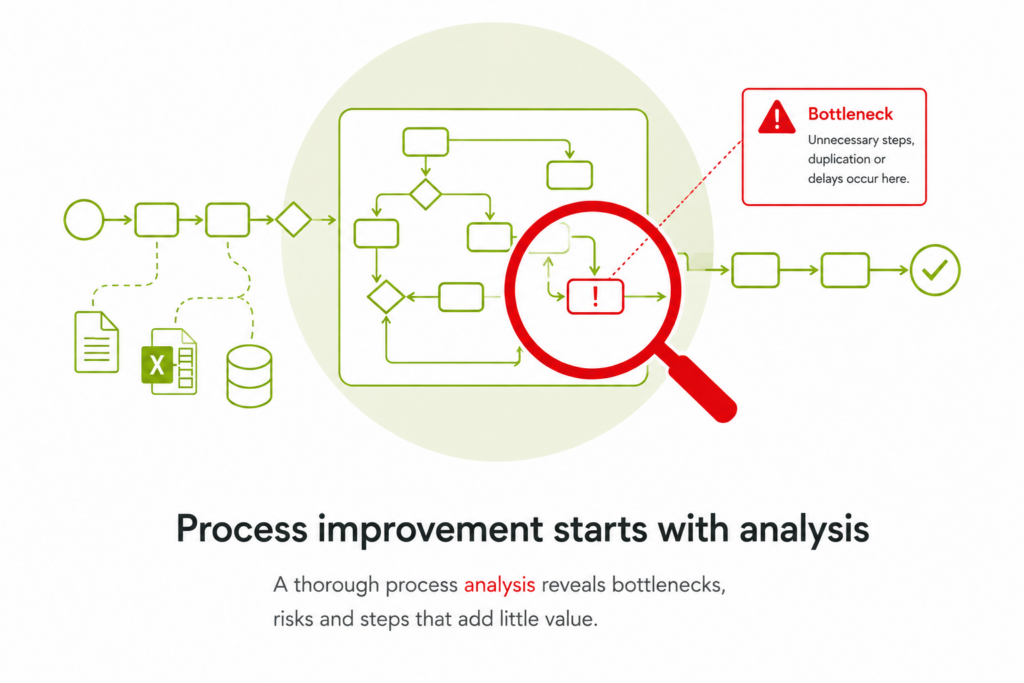
According to Maurits, this is the first key step. Organisations are often keen to move quickly towards solutions, for example through digitalisation or new tools. However, without proper analysis, there is a risk of simply digitalising existing inefficiencies.
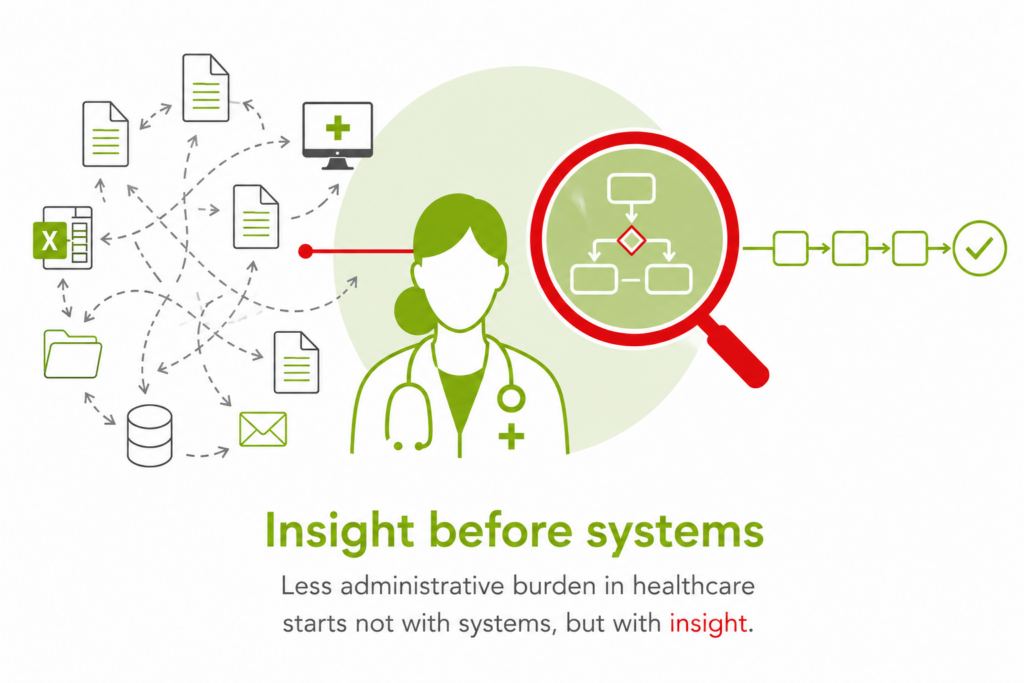
In many healthcare organisations, records and data pass through multiple systems, manual checks and Excel spreadsheets. Data is exported, amended, re-entered and checked. It is precisely these intermediate steps that often create a significant and unnecessary administrative burden.
A thorough process analysis reveals:
This can immediately provide surprising insights. In one practical example discussed during the webinar, the analysis showed that approximately 30% of records were either unnecessary or, at the very least, were not actually being used. That insight alone created considerable scope for improvement.
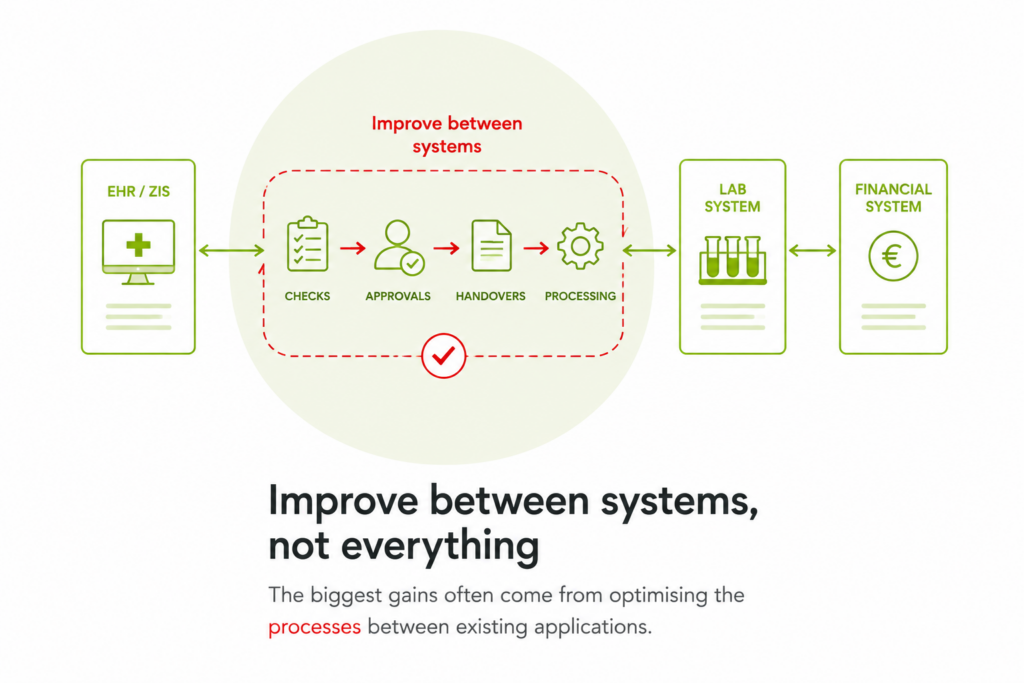
An important point raised during the discussion was that process improvement does not automatically mean that an organisation needs to replace its entire core system. In many cases, the greatest gains can be achieved by improving the processes between existing applications.
Consider checks, approvals, handovers and manual processing that currently take place outside the main systems. These types of process steps can often be digitalised effectively without the need for large-scale system replacement. The benefits can be significant:
Digitalisation should not be the driving force, but rather a means of support. The goal is not more technology, but smarter processes that genuinely help employees in their day-to-day work.
While Maurits focused primarily on the process perspective, Gerard brought in the change management perspective. Even when the analysis is sound and the technical solution makes sense, this does not mean that change will automatically be embraced by the organisation.
According to Gerard, successful change requires five factors:
The last point is particularly important in healthcare. Workloads are high, capacity is limited and many employees have already experienced multiple change programmes. This can sometimes lead to change fatigue: the feeling that yet another new initiative is being introduced without previous initiatives having been properly completed or having made a noticeable difference.
That is why a purely top-down approach rarely works well.
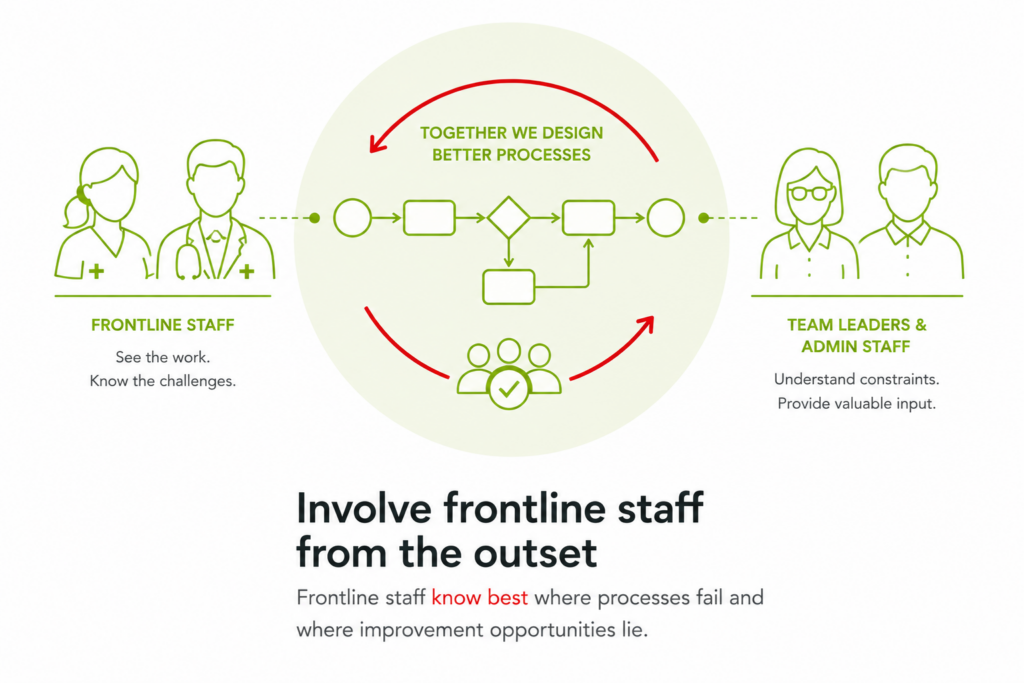
One of the most important insights from the webinar was that process improvement becomes much more effective when employees are involved from the very beginning. This is not only about creating support for change, but also because frontline staff usually know exactly where processes are failing.
Healthcare professionals, team leaders and administrative staff see every day:
Organisations that design change solely from a policy or management perspective risk developing solutions that work in theory but fail in practice.
The question, therefore, is not simply: can it be made more efficient? The real question is: does the employee also experience it as better and easier?
That distinction is crucial.
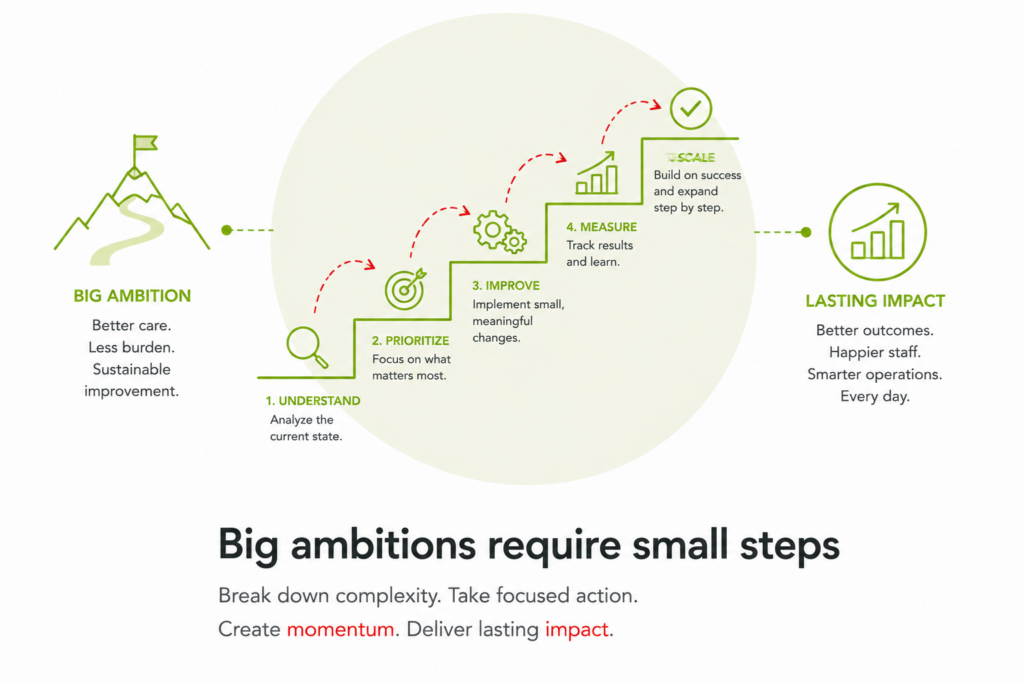
Another important insight is that sustainable change rarely happens in one big leap. Particularly in healthcare, a phased approach tends to work better than implementing a major transformation all at once.
Gerard described this aptly as working in “ridiculously small steps”. Do not start with an all-encompassing transformation. Instead, begin with manageable improvements that deliver a noticeable impact quickly.
Why does this work?
In this way, process improvement develops into a continuous learning process rather than a one-off project.
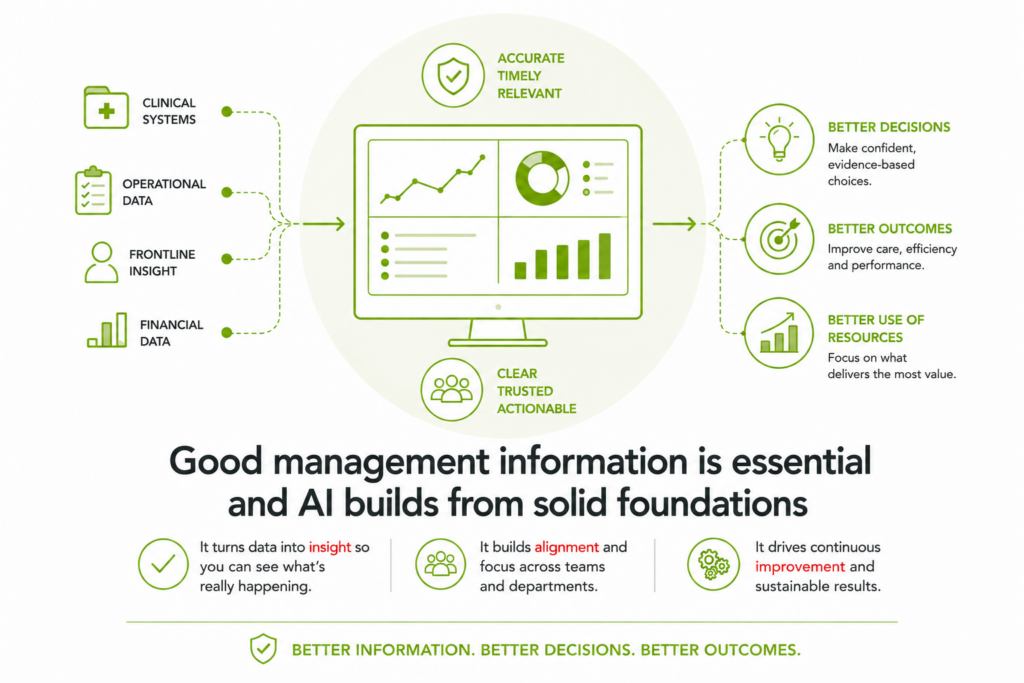
Another important theme discussed during the webinar was the importance of reliable management information. When processes are poorly designed, organisations often also lack visibility of performance, deviations and risks.
This can have major consequences. In one practical example, a cumbersome and partly manual process resulted in significant amounts of revenue not being invoiced. This was not only because the process itself was inefficient, but also because there was insufficient management information available to identify discrepancies in a timely manner.
Process improvement therefore delivers more than just time savings. It can also lead to:
Artificial intelligence was also discussed. The conclusion was clear: AI certainly offers opportunities, but only if the foundations are in place.
Without good-quality data and well-designed processes, AI remains largely a promise. With reliable data, however, AI can help with:
But the same principle applies here: technology is not the starting point. First gain a clear understanding of the process, and only then make smart use of digitalisation and AI.
The webinar ended with an important point: do not focus solely on what needs to be improved, but also look at what is already working well.
In virtually every healthcare organisation, there are employees who have found smart solutions, introduced small improvements or made processes just that little bit more efficient. By making these initiatives visible and recognising their value, organisations strengthen their capacity to learn and improve.
After all, improvement does not begin solely with analysis and technology. It also begins with recognition, engagement and energy.
Reducing the administrative burden in healthcare is essential. But organisations that genuinely want to make an impact need to look beyond simply calling for administration to be “halved”.
The key lies in:
Do not think bigger than necessary. Think smarter. And always start with the day-to-day work of the healthcare professional.
Would you like to discuss this further, or do you recognise these challenges within your organisation? Please feel free to get in touch with us.