When absenteeism rises, the reflex is to hand it to HR. But what if the absence figure isn’t the problem, only the first sign that something deeper is wrong? This is the story of a manager who asked HR to fix it, and of what turned up when someone finally went to look.
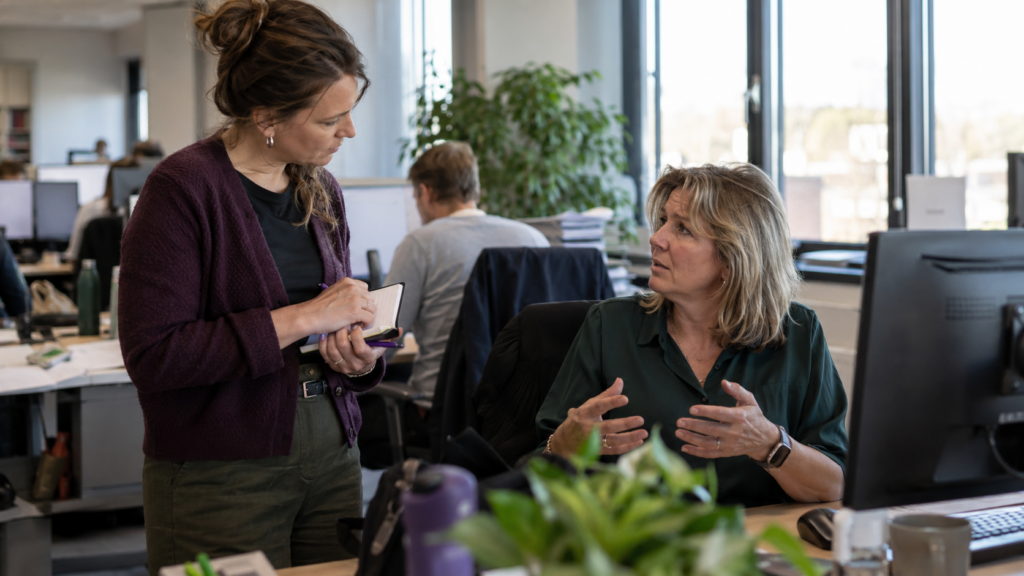
“Fix the absenteeism,” Mark (Operational Manager) told Jane from HR. He said it wearily, coffee in hand. The absence figure in the management report was red, with an arrow pointing up. And absenteeism is an HR matter, isn’t it?
Jane saw it differently. So she spent a week walking around the workplace talking to co-workers, with no agenda.
At the coffee machine she spoke to Jim. “I don’t know where my work ends and Linda’s begins. I hand in my part, and a week later it comes back with the same comments as last month.”
Linda sat two desks away. “I get work I can’t do anything with. Nobody has ever told me what’s expected of me. So I guess.”
Two people, one process, and nobody seeing how one person’s work determined the quality of the other’s. The same mistakes kept coming back. Priorities shifted from meeting to meeting. There was a lot of discussion and very little decision-making. Mark was so deep in the day-to-day that he was barely there for his team. The directors looked at dashboards and never set foot in the workplace.
Frustration turned into blame. “You should have delivered that.” People who used to joke fell silent. And then people started dropping out.
One Thursday afternoon, Jane laid her notes next to the absence report. The report told her who was off sick. Her notes told her why.
Absenteeism is not a cause. It is a symptom and, in risk terms, a lagging indicator: a signal that arrives after the damage is already done. The real risks sat earlier in the chain: unclear roles, missing frameworks, duplicated work, no feedback, and employees who were never asked to contribute to the process they work with every day.
None of those risks appeared in the risk register. Absenteeism did, as an outcome rather than a warning.

The TNO work-pressure model names unclear tasks, interruptions and a lack of clarity about roles and responsibilities as sources of work pressure. In 2025, TNO and CBS found that 60% of employees with high job demands and little autonomy had been absent in the past year, compared with 52% of all employees. And a meta-analysis in JAMA Psychiatry (Duchaine et al., 2020) found a 47% higher relative risk of absence due to a psychiatric disorder when high demands were combined with low control.
That isn’t bad luck. It’s predictable, and what is predictable can be managed.

Why do you treat a production failure as a risk, and rising absenteeism as a personnel issue? An absence programme, a vitality week or a fruit basket puts out flames. The gas leak lies in how the work is organised and how people communicate.
And that isn’t solely HR’s concern.
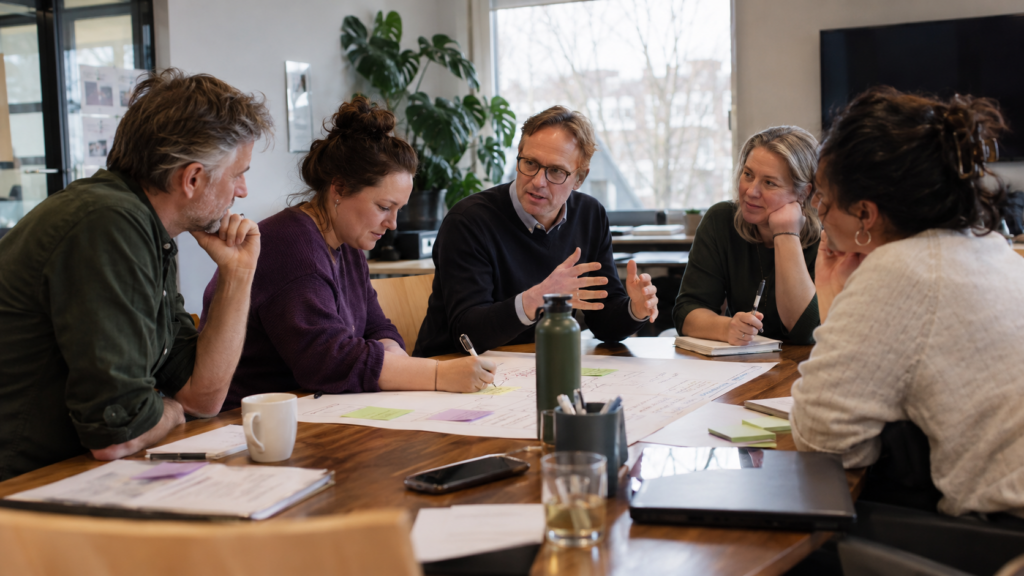
Weeks later, Jane sat down with Mark, a sheet of paper in her hand. Not a report, but a process, drawn up together with Jim, Linda and five colleagues.
“You asked me to fix the absenteeism. I can’t do that alone. Neither can you. This is a shared responsibility of the board, managers, HR and employees.”
Mark looked at the drawing. For the first time, he saw the work as his team experienced it: the handovers that went wrong, the duplicated effort. And what he himself had been missing: presence, clear frameworks, a listening ear.
“Where do we start?” he asked.
The difficulty is that you rarely see this on your own. Those who work in the processes every day get used to them, and those who sit above them mostly see figures. A fresh pair of eyes from outside helps to spot where the work gets stuck and where communication breaks down.
At BPM Power, we are happy to think along with you, from the perspectives of process optimisation and change management. Together with your employees, we map out where the friction lies. Then we optimise the processes: we remove duplicated work and unnecessary handovers, make roles, frameworks and priorities clear, and structure meetings so that decisions actually get made. We then guide the change so that it sticks. That way, you tackle absenteeism at its source rather than at the symptom.
Curious what this could mean for your organisation? Do get in touch for an initial conversation.