It’s 8:47 on a Monday, and Mark’s first day starts with no laptop, no logins and no one expecting them. Upstairs, HR is drowning in approvals. Discover how connecting the full employee journey turns friction into a great first impression, and boosts wellbeing and retention while reducing presenteeism.
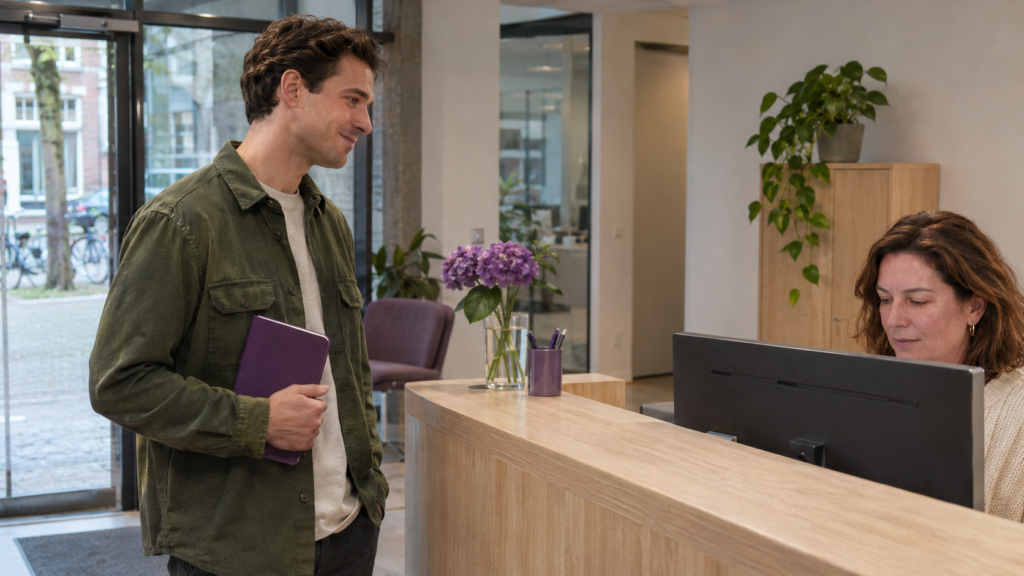
It’s 8:47 on a Monday morning, and Mark is standing at the reception desk with a fresh notebook and a nervous smile.
Mark is excited. New job, new team, new start. But nobody has told the IT department that Mark is arriving today. There’s no laptop. There are no system logins. The manager is in back-to-back meetings, and the welcome email is still sitting in someone’s drafts folder.
By 11:00, Mark is reading the company handbook on a borrowed screen. By Wednesday, Mark is quietly wondering: did I make the right choice?
Meanwhile, three floors up, Lisa is wrestling with a very different problem.
Lisa is an HR manager, and she has a gift for people. At least, she used to have time to use it.
This morning she’s chasing a manager for a signature on a contract. She’s checking five different systems to find out who is on leave this week. An employee has asked for the third time whether their training request was approved, and Lisa honestly doesn’t know. The request went by email, and the email went… somewhere.
Nobody here is doing a bad job. Everyone is working hard. And yet the process around them is quietly failing them.
A slow approval. A lost request. A manager who can’t see what’s open. On their own, these are small things. Together, they become an experience. And employees remember experiences.

Here is the uncomfortable part. Research from the Society for Human Resource Management (SHRM) suggests that replacing an employee costs 1 to 4 times their annual salary. That is the price tag when a Mark decides that this isn’t the place for them after all.
But the leavers are only the visible part of the story. For every employee who walks out the door, there are others who stay and quietly check out. They are present, but they’re frustrated, disengaged, wasting energy on administrative friction instead of doing the work they were hired for. That’s presenteeism: people at their desks, but not at their best.
Neither shows up neatly on a balance sheet. Both are paid for, every single month.
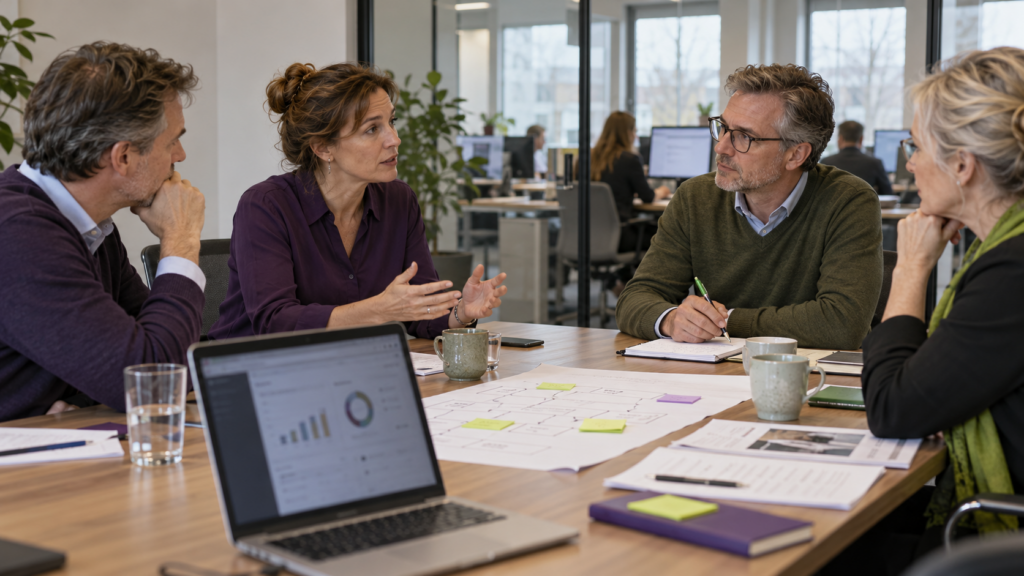
Now imagine the Marke Monday, differently.
Weeks earlier, the moment Mark accepted the offer, a process started. Not an email chain, but a process. IT knew to prepare a laptop. Access and system logins were arranged. The manager received a checklist, and a reminder. The contract was generated and e-signed in minutes.
At 8:47, Mark walks in and everything is simply ready. The desk, the equipment, the logins. Even the first-week schedule.
Mark’s first thought isn’t where do I start? It’s they were expecting me.
And Lisa? Lisa spent her morning sitting down with a team member who was struggling, because she wasn’t chasing signatures. Every approval and open task was visible to her and to the managers, without a single status email. Employees submitted their leave and training requests themselves, tracked them, and got answers without having to ask HR each time. Reviews, training and certifications moved forward on schedule, without anyone having to remember.
This isn’t a fairy tale. It’s what happens when the full employee journey is treated as one connected system: hiring, onboarding, employee records, time off and absences, reviews and development, and departures. Every stage drives a process, and every process can either create friction or remove it.
At fashion retailer Answear, HR processes run on the WEBCON platform. The processing time per hire dropped from 1 hour to 15 minutes. More than 550 employees have been onboarded this way. And the whole thing was configured in-house, by people who understand HR, without a long and costly development project.
Think about what that means beyond the numbers. Each of those hours saved is an hour an HR professional can spend on conversations instead of administration. Each smooth first day is a new colleague who feels welcome from the start. That is where retention begins.
A common question: “We already have a payroll or ERP system. Isn’t that enough?”
Your payroll system does its job well: payroll processing, master records, tax reporting, time and attendance. But it was never built for everything that happens around it: multi-level approvals, cross-departmental onboarding, document generation and e-signatures, equipment and IT access, performance reviews, training and certifications, and modern self-service.
That’s the gap where Monday mornings go wrong. A process platform sits between your ERP, your people and their next step, integrating with your existing HR and business systems rather than replacing them.
And because HR data is personal data, it matters how that gap is filled. WEBCON is an EU-based company with engineering, support and data in the EU, ISO 27001 certified, with field-level access control, consent management and full erasure workflows with an audit trail. For organisations that need it, on-premises is available too. Your data, your rules.
When we talk about ROI in HR, the conversation often stops at efficiency: fewer hours, fewer errors, fewer systems. And those gains are real.
But the bigger return sits in what happens to people:
Wellbeing and business results aren’t opposing forces. When the processes work, they feed each other.

Every organisation has its own Mark and its own Lisa. The question is whether the processes around them are helping or hindering.
The good news: you don’t have to transform everything at once. Start with one process. The one that hurts the most. Maybe it’s onboarding. Maybe it’s leave requests, or reviews.
As the sole WEBCON partner in the Netherlands, BPM Power helps you pick that first process, design it around your employees and your HR team, and build it so it delivers value for both people and the business.
Ready to turn your next Monday into a great first day? Let’s talk.